
Table of Contents
ToggleEsports coverage vs traditional sports coverage represents a fascinating divide in modern broadcasting. Both formats deliver competitive action to millions of viewers. But, they approach production, commentary, and audience engagement in distinct ways. Traditional sports have refined their coverage over decades. Esports has built its approach from digital-native foundations. Understanding these differences helps viewers appreciate each format’s strengths. It also reveals where both industries can learn from each other.
This comparison examines the key areas where esports coverage vs traditional sports coverage diverge. From broadcasting methods to production standards, each format has developed unique characteristics. The differences reflect their audiences, technologies, and cultural origins.
Key Takeaways
- Esports coverage vs traditional sports coverage differs fundamentally in source material—esports pulls data directly from game servers, while traditional sports rely on physical camera angles.
- Esports streams are often free on platforms like Twitch and YouTube, whereas traditional sports typically require cable subscriptions or paid streaming services.
- Audience engagement in esports happens in real-time through interactive chat features, creating a participatory experience that traditional broadcasts struggle to replicate.
- Esports commentary must balance explaining complex game mechanics for newcomers while keeping knowledgeable fans engaged, unlike traditional sports where terminology is well-established.
- Production quality in esports has improved dramatically and now rivals traditional sports broadcasts, though each format faces unique technical challenges.
- Both industries can learn from each other—traditional sports can adopt more interactive engagement tools, while esports can benefit from traditional broadcasting’s refined production standards.
How Esports Broadcasting Differs From Traditional Sports
Esports coverage vs traditional sports broadcasting starts with fundamentally different source material. Traditional sports capture live physical action from camera angles positioned around venues. Esports pulls data directly from game servers. This creates a unique observer mode that offers perspectives impossible in physical sports.
Traditional sports broadcasts rely on camera operators, replay technicians, and directors making real-time decisions. They capture what happens on the field or court. Esports observers can show any player’s perspective, display overhead tactical views, or highlight specific in-game elements. The game itself becomes the broadcast tool.
Another distinction involves match scheduling and format. Traditional sports follow seasonal calendars with predictable game lengths. A football game runs about three hours. A basketball game takes around two and a half hours. Esports matches vary wildly. A League of Legends game might last 25 minutes or stretch past an hour. Counter-Strike matches can extend across multiple maps over several hours.
Live events also differ in execution. Traditional sports broadcast from stadiums built for that purpose. Esports events often transform arenas, convention centers, or purpose-built venues. The stage setup, player seating, and screen configurations require different planning than traditional sports venues.
Broadcast accessibility marks another key difference. Many esports tournaments stream freely on platforms like Twitch and YouTube. Traditional sports often sit behind cable subscriptions or streaming service paywalls. This open access has fueled esports growth among younger audiences who expect free content.
Audience Engagement and Viewing Platforms
The esports coverage vs traditional sports divide becomes clearest in how audiences engage. Traditional sports fans watch on television networks, cable channels, or league-specific streaming apps. They interact through social media, fantasy leagues, or sports bars with fellow fans.
Esports audiences concentrate on streaming platforms. Twitch dominates this space, with YouTube Gaming as a major competitor. These platforms offer chat functions where thousands of viewers react simultaneously. Emotes, spam, and memes create a shared viewing experience that traditional broadcasts can’t replicate.
This chat interaction fundamentally changes viewer behavior. Esports fans don’t just watch. They participate in a running conversation. Popular moments generate floods of reactions. Inside jokes spread through communities. Streamers and commentators often acknowledge chat directly, creating a feedback loop.
Traditional sports have experimented with similar engagement. Twitter integration, second-screen apps, and fantasy league updates during broadcasts attempt to add interactivity. Yet these features feel bolted on rather than built in. The core broadcast remains a one-way transmission.
Viewing habits also differ. Traditional sports fans often watch entire games in scheduled time slots. Esports viewers frequently jump between streams, watch highlights, or tune in for specific matches during lengthy tournaments. The always-on nature of streaming platforms enables this behavior.
Global accessibility shapes both markets differently. Traditional sports face time zone challenges for international fans. Esports tournaments run across multiple regions, but VOD (video on demand) culture means viewers catch up on their own schedules. Spoiler culture exists, but it’s less severe than in traditional sports where results dominate news immediately.
Commentary and Analysis Styles
Commentary styles reveal striking differences between esports coverage vs traditional sports. Traditional sports commentary evolved over decades of radio and television. Play-by-play announcers describe action. Color commentators provide analysis and storytelling. The formula works because audiences understand the sports being covered.
Esports commentary serves a different purpose. Many viewers understand game mechanics deeply. Some viewers are new and need explanations. Commentators balance both needs constantly. They must explain strategic decisions without boring knowledgeable fans or confusing newcomers.
The language itself differs dramatically. Esports casters use game-specific terminology, player callouts, and community slang. Traditional sports commentary uses established terminology that viewers learned over years. Esports terms change as games update and meta strategies shift.
Analyst desks in esports resemble traditional sports studio shows but operate differently. Esports analysts break down replays frame by frame. They discuss item builds, ability usage, and positioning decisions. Traditional sports analysis focuses on plays, formations, and athlete performance. Both provide value, but esports analysis often goes deeper into decision trees and probability.
Pacing also differs. Traditional sports have natural breaks, timeouts, quarters, innings, where commentators fill time. Esports matches can run continuously for long stretches. Casters maintain energy through extended periods of intense action. Between games, analyst segments and interviews fill gaps similar to halftime shows.
Many esports casters came from the games they cover. Former professional players frequently join broadcast teams. Traditional sports also hire former athletes, but esports has a shorter pipeline. A retired esports pro might be 25 years old and transition immediately to casting.
Production Quality and Technical Requirements
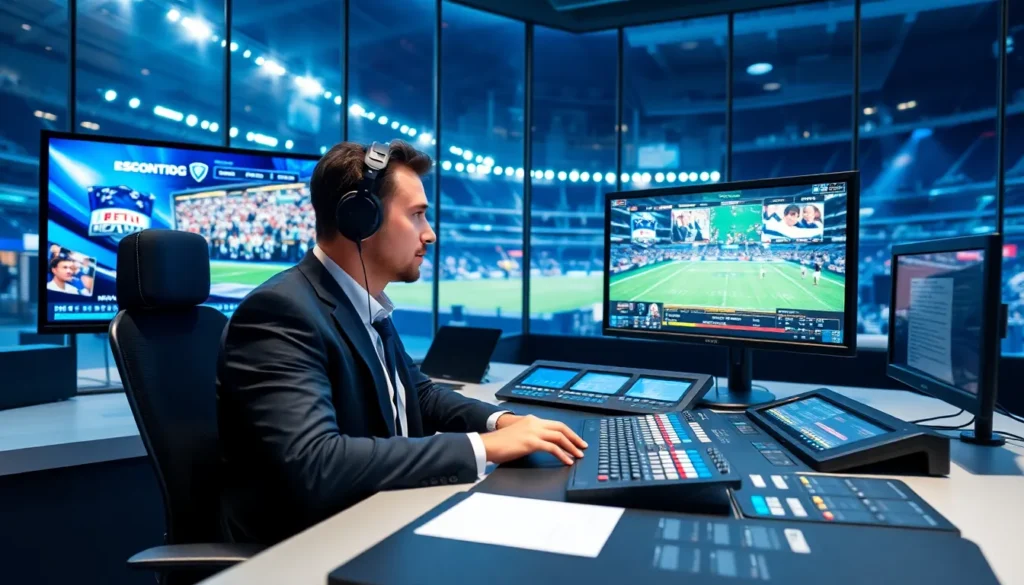
Production requirements highlight practical differences in esports coverage vs traditional sports. Traditional sports broadcasts use decades-old infrastructure. Camera positions, replay systems, and graphics packages follow established standards. Networks invest billions in equipment, satellite uplinks, and studio facilities.
Esports production builds on gaming technology and streaming infrastructure. Observers run the game client to capture footage. Production teams overlay graphics, stats, and player cameras. The technical stack differs entirely from traditional broadcasting.
Audio presents unique challenges for esports. Traditional sports capture crowd noise and on-field sounds. Esports must balance game audio, crowd reactions, and commentary. Some games produce loud, chaotic soundscapes. Others are quieter and more strategic. Mixing these elements requires different expertise than traditional sports audio.
Visual presentation has evolved rapidly. Early esports streams looked amateur compared to television sports. Today’s major tournaments feature broadcast quality rivaling traditional sports. Stage design, lighting, and graphics packages have improved dramatically. The gap has narrowed, though traditional sports still hold advantages in certain production areas.
Technical failures affect both formats differently. Traditional sports broadcasts might lose a camera angle or audio feed. Esports can face game crashes, server issues, or software bugs that halt competition entirely. These technical pauses are rare in traditional sports but happen occasionally in esports.
Remote production has become more common in both industries. Traditional sports experimented with remote broadcasts during the pandemic. Esports has long operated with distributed production teams across multiple locations. This flexibility gives esports production advantages in certain situations.