Table of Contents
ToggleEsports coverage examples show how competitive gaming has become a major media category. From live broadcasts to written news, media outlets report on esports with the same depth they give traditional sports. The esports industry generated over $1.8 billion in 2024, and media coverage plays a key role in connecting fans to teams, players, and tournaments.
This article breaks down the main formats media outlets use to cover esports. Each format serves a different purpose, live broadcasting captures the action, written recaps provide analysis, documentaries tell deeper stories, and social media keeps fans updated in real time. Understanding these esports coverage examples helps fans, journalists, and industry professionals see how competitive gaming content reaches millions of viewers worldwide.
Key Takeaways
- Esports coverage examples span live broadcasts, written news, documentaries, and social media—each serving distinct audience needs.
- Live event broadcasting mirrors traditional sports production with professional commentary teams, multiple camera angles, and augmented reality graphics.
- Written esports coverage delivers in-depth match recaps, breaking news on roster moves, and industry analysis that fans can consume at their own pace.
- Documentary content creates emotional connections by showcasing player backgrounds, team journeys, and behind-the-scenes access unavailable in other formats.
- Social media provides the fastest esports coverage, with highlights and updates reaching millions within seconds of live plays.
- Content creators and influencers now complement traditional journalism, offering casual esports coverage that often reaches wider audiences.
Live Event Broadcasting and Commentary
Live event broadcasting remains the most visible form of esports coverage. Platforms like Twitch, YouTube Gaming, and dedicated esports channels stream tournaments to global audiences. Major events like The International (Dota 2), the League of Legends World Championship, and the Call of Duty League regularly draw millions of concurrent viewers.
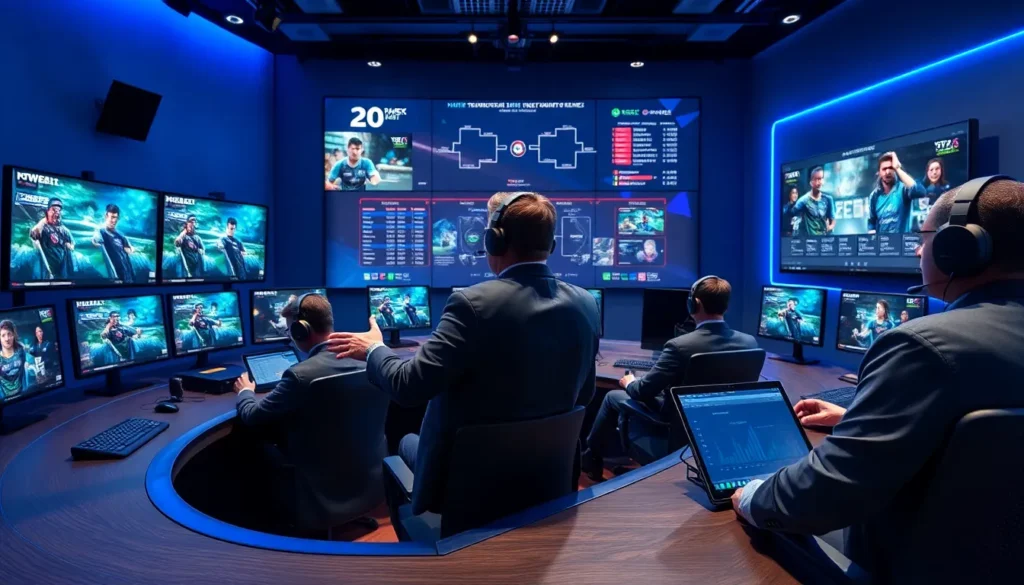
These broadcasts mirror traditional sports production. They feature multiple camera angles, instant replays, and on-screen graphics showing player stats and team standings. The production quality of top-tier esports events now rivals that of NFL or NBA broadcasts.
Commentary Teams and Analysis Desks
Professional commentary teams drive the viewer experience. Most esports broadcasts use a two-person setup: a play-by-play caster describes the action, while an analyst explains strategy and decision-making. Former professional players often serve as analysts, bringing credibility and insider knowledge.
Analysis desks appear between matches to discuss results and preview upcoming games. These segments give viewers context and build storylines around teams and players. Networks like ESPN have dedicated esports coverage segments that follow this format.
Production Value and Technical Setup
Esports coverage examples from major tournaments show impressive technical setups. The 2024 League of Legends Worlds used over 50 cameras and employed augmented reality graphics during player introductions. Sound design, lighting, and stage production create an atmosphere that translates well to screens.
Smaller tournaments and regional leagues use simpler setups but still deliver professional coverage. Community casters and grassroots organizations provide esports coverage for amateur and semi-professional scenes, helping develop new talent and grow local fan bases.
Written News and Match Recaps
Written esports coverage fills a different need than live broadcasts. News articles, match recaps, and feature stories give fans detailed information they can consume at their own pace. Sites like Dot Esports, Dexerto, and The Esports Observer publish hundreds of articles weekly covering roster changes, tournament results, and industry news.
Match recaps break down key moments from competitive games. Good recaps explain why certain plays mattered and how they affected the outcome. They often include statistics, player quotes, and analysis that viewers might miss during a live broadcast.
Breaking News and Transfer Coverage
Roster moves and team announcements generate significant traffic for esports news sites. Writers track rumors, verify sources, and report confirmed signings. This coverage mirrors sports journalism, with reporters building relationships with team staff and players to get stories first.
Industry news also falls under written esports coverage. Articles about sponsorship deals, league expansions, and business developments help fans understand the broader esports ecosystem. This type of esports coverage examples shows how the industry has matured.
Opinion Pieces and Rankings
Editorial content adds personality to esports coverage. Power rankings, player tier lists, and opinion columns spark discussion among fans. These pieces often generate more engagement on social media than straight news articles because they invite debate and disagreement.
Documentary and Feature-Length Content
Documentary content represents some of the best esports coverage examples for storytelling. Long-form videos explore player backgrounds, team histories, and tournament journeys in ways that news articles and live broadcasts cannot.
League of Legends publisher Riot Games produces documentary series like “League of Legends Esports: The Story” that chronicle entire competitive seasons. These productions feature interviews, behind-the-scenes footage, and narrative structure that creates emotional connection with subjects.
Player Profiles and Team Features
Player profile pieces humanize competitors. They show training routines, personal struggles, and the sacrifices required to compete at the highest level. ESPN’s esports coverage has included feature pieces on players like Faker (Lee Sang-hyeok) that introduced casual viewers to competitive gaming stars.
Team documentaries follow organizations through seasons or tournament runs. Content like “True Sight” from Valve (covering Dota 2) gives unprecedented access to team communications and preparation. These esports coverage examples reveal what happens beyond the stage.
Netflix and Mainstream Documentary Production
Mainstream platforms have entered esports documentary production. Netflix released content about professional gaming, reaching audiences who might not visit esports news sites. This crossover represents how esports coverage has expanded beyond endemic outlets to general entertainment platforms.
Social Media and Real-Time Updates
Social media provides the fastest form of esports coverage. Twitter/X, Instagram, and TikTok deliver updates within seconds of plays happening. Official league accounts, team pages, and individual journalists all contribute to this real-time information flow.
Clip culture drives much of social media esports coverage. Memorable plays get cut into short videos and shared across platforms. A single highlight can reach millions of views before a match ends. This type of esports coverage examples shows how fans consume competitive gaming content differently than previous generations watched traditional sports.
Platform-Specific Content
Each social platform requires different content approaches. Twitter/X works best for breaking news and quick updates. Instagram and TikTok favor visual content, player reactions, behind-the-scenes moments, and edited highlights. YouTube Shorts competes in this space with algorithm-driven distribution.
Teams and leagues employ social media managers who create platform-specific esports coverage. They develop content calendars, respond to trending topics, and engage with fan communities. The best accounts balance promotional content with genuine fan interaction.
Influencer and Creator Coverage
Content creators provide unofficial esports coverage that often reaches wider audiences than traditional outlets. YouTubers and streamers react to matches, analyze results, and discuss news with their communities. Their casual approach appeals to viewers who find formal journalism less engaging.
This creator-driven esports coverage blurs lines between journalism and entertainment. Some creators break stories, while others focus purely on opinion and entertainment. Both contribute to how fans experience competitive gaming content.