Table of Contents
ToggleEsports coverage techniques determine whether viewers stay glued to a broadcast or click away. The competitive gaming industry now attracts hundreds of millions of viewers worldwide, and production quality plays a major role in audience retention. Professional broadcasts blend camera work, commentary, graphics, and multi-platform distribution into a cohesive viewing experience.
This article breaks down the core esports coverage techniques that separate amateur streams from professional productions. Whether someone works in broadcast production or wants to understand what makes great esports content, these strategies provide a practical foundation.
Key Takeaways
- Effective esports coverage techniques combine camera work, commentary, graphics, and multi-platform distribution to keep viewers engaged.
- Observers are critical to broadcast quality—they anticipate action by studying player habits and game mechanics before matches begin.
- The two-caster model pairs play-by-play energy with color commentary analysis to maintain viewer interest without voice fatigue.
- Real-time data integration through game APIs adds depth with live statistics, win probability predictions, and automatic graphic updates.
- Platform-specific content is essential since Twitch, YouTube, and regional platforms each have unique audience expectations and features.
- Strong esports coverage techniques include strategic replay timing, player camera reactions, and easy clip-sharing tools to boost engagement and shareability.
Understanding the Fundamentals of Esports Production
Esports production shares DNA with traditional sports broadcasting, but the digital nature of games creates unique opportunities and challenges. A solid understanding of production fundamentals helps teams deliver consistent, high-quality esports coverage techniques across different titles and tournament formats.
Technical Infrastructure
Professional esports broadcasts require specific hardware and software setups. Production teams typically use broadcast-grade capture cards, streaming encoders, and production switchers. The signal chain matters, latency issues can desync audio and video, creating a poor viewer experience.
Most major tournaments run redundant systems. If the primary encoder fails, a backup takes over within seconds. This reliability standard has become expected at Tier 1 events.
Workflow and Team Structure
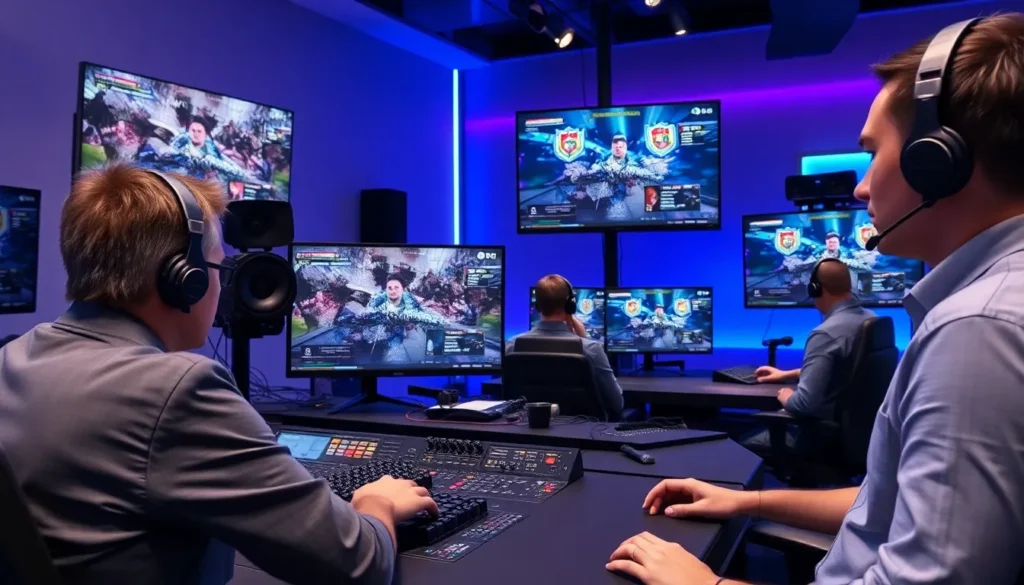
A typical esports production crew includes:
- Technical director (controls the broadcast switcher)
- Observer(s) or in-game camera operators
- Graphics operator
- Audio engineer
- Producer (coordinates all elements)
Smaller productions often combine roles, but the functions remain the same. Clear communication between team members keeps broadcasts smooth during fast-paced matches.
Game-Specific Knowledge
Every esports title has different production requirements. A League of Legends broadcast needs different observer perspectives than a Counter-Strike match. Production teams must understand game mechanics, player tendencies, and typical match flow to anticipate important moments.
Camera Work and Observer Perspectives
Camera work forms the backbone of esports coverage techniques. Unlike traditional sports with physical cameras, esports observers control virtual cameras within the game itself. This creates both freedom and responsibility.
The Observer Role
Observers are the unsung heroes of esports broadcasts. They watch minimap movements, track player positions, and predict where action will happen next. Great observers catch the crucial headshot or team fight as it unfolds. Poor observers miss key moments, leaving viewers frustrated.
Top observers study player habits extensively. They know which players prefer aggressive positions, who tends to flank, and where teams typically contest objectives. This preparation lets them position the camera before action starts.
Camera Techniques by Genre
First-person shooters demand quick perspective switches between players. Observers balance showing individual skill with team coordination. They might follow a star player during a clutch situation, then pull back to a wider view during team rotations.
MOBA titles like Dota 2 use more overhead perspectives. Observers zoom out during team fights to show all ten players, then zoom in for individual plays. Free camera movement helps viewers understand positioning and strategy.
Fighting games keep a fixed side view but still require observer decisions about replay timing and slow-motion use.
Replay Integration
Strong esports coverage techniques include strategic replay use. Observers and directors coordinate to show replays during natural downtime, after a round ends or during respawn timers. Replays highlight plays viewers might have missed and provide analysis opportunities for casters.
Commentary and Analyst Desk Strategies
Commentary transforms gameplay footage into an engaging broadcast. The right casting duo can make an average match exciting, while poor commentary drags down even the best games. Esports coverage techniques for commentary follow tested patterns but leave room for personality.
The Two-Caster Model
Most broadcasts pair a play-by-play caster with a color commentator. The play-by-play caster describes action as it happens, building energy during intense moments. The color commentator provides analysis, context, and strategic insight during slower periods.
This division works because it prevents voice fatigue and gives each caster a clear role. Play-by-play casters develop rapid speaking skills and exciting delivery. Color casters study the game deeply and explain decisions to viewers.
Energy Management
Great casters match their energy to the moment. They stay conversational during early game setups, then build intensity as stakes increase. A five-minute hype performance exhausts viewers. Smart casters save their biggest reactions for truly important plays.
The best commentators also read chat and social media sentiment. They address viewer questions indirectly, explain confusing moments, and acknowledge community storylines.
Analyst Desk Content
Pre-game and post-game analysis segments serve multiple purposes. They fill time between matches, provide deeper strategic discussion, and give play-by-play casters a break. Analyst desks typically feature former professional players who offer insider perspectives.
Effective analyst segments stay focused. Three-to-five minute discussions work better than lengthy breakdowns. Visual aids like replays and diagrams help viewers follow complex strategic points.
Integrating Graphics and Real-Time Data
Graphics and data visualization distinguish professional esports coverage techniques from basic streams. Well-designed graphics inform viewers without cluttering the screen. Real-time statistics add depth for dedicated fans while remaining accessible to newcomers.
Essential Overlay Elements
Every esports broadcast needs certain graphics:
- Score and round information
- Team names and logos
- Player names and current status
- Game clock or timer
- Tournament bracket position
These elements should feel integrated with the game’s visual style. Clashing colors or fonts distract viewers from the action.
Advanced Data Integration
Modern esports coverage techniques pull live data from game APIs. This allows graphics to update automatically, showing gold differentials, kill counts, objective timers, and player statistics in real time.
Some broadcasts add predictive elements. Machine learning models estimate win probability based on current game state. These predictions create additional viewer engagement and discussion points.
Lower Thirds and Player Spotlights
Lower third graphics introduce players and provide context. A quick stat line might show a player’s tournament performance or head-to-head record against opponents. These details help viewers invest in individual storylines.
Player cameras also fall under graphics integration. Picture-in-picture views of player reactions during crucial moments add emotional weight to big plays. Seeing a player’s celebration or disappointment connects viewers to the human element.
Engaging Audiences Across Multiple Platforms
Modern esports coverage techniques must account for fragmented audiences. Viewers watch on Twitch, YouTube, dedicated team apps, and regional streaming platforms. Each platform has different features, cultures, and technical requirements.
Platform-Specific Considerations
Twitch viewers expect chat interaction, emote culture, and community engagement. YouTube audiences often watch replays and value clean timestamps. Chinese platforms like Bilibili and Huya have different moderation standards and feature sets.
Smart production teams create platform-native content. A Twitch stream might include chat polls and predictions. A YouTube version might add chapter markers and improved audio mixing for replay viewing.
Second Screen Experiences
Many viewers watch broadcasts while playing games themselves. Second screen apps provide stats, alternative camera angles, and interactive features. These companion experiences deepen engagement without requiring full attention to the main broadcast.
Some tournaments let viewers control their own observer camera or choose which player perspective to follow. This level of control appeals to hardcore fans who want to study specific players or strategies.
Social Media Integration
Twitter, Reddit, and Discord communities discuss matches in real time. Production teams monitor these channels and sometimes incorporate trending reactions into broadcasts. A viral clip or community meme can become part of the official broadcast narrative.
Clip creation tools let viewers share highlights instantly. Smart esports coverage techniques make clipping easy, clear player names, visible scores, and memorable moments that work as standalone content.